LANGUAGE
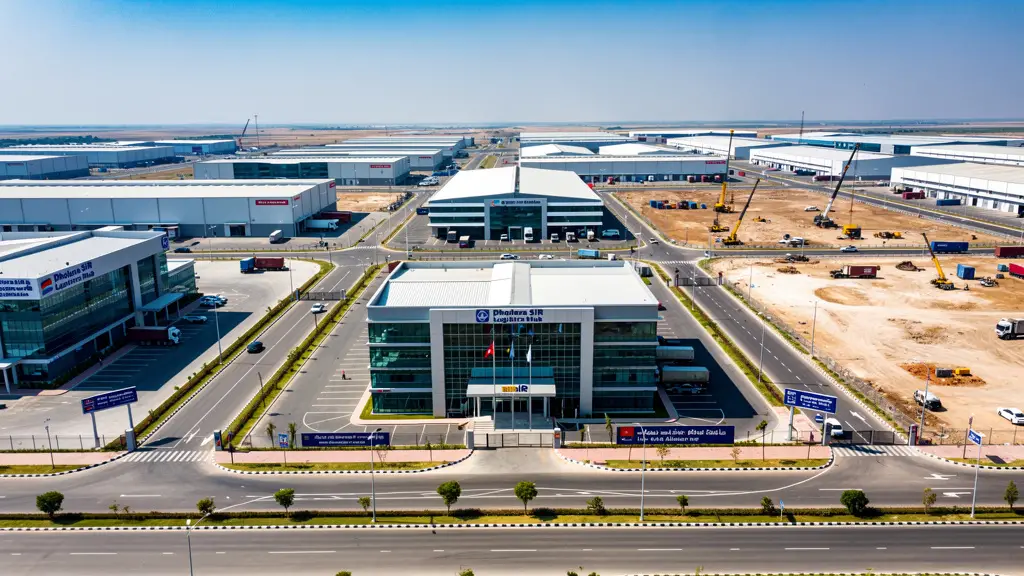
Dholera SIR: India's Blueprint for Global Logistics Investment
The Dholera Special Investment Region has emerged as India's most structured greenfield industrial city, offering a transparent land allotment policy specifically engineered to attract global investors into its logistics and warehousing hub. Unlike fragmented land markets in older cities, Dholera SIR operates under a single-window authority that governs zoning, pricing, and long-term leasehold rights, making it a benchmark for institutional grade infrastructure investment.
Why Logistics Investors Are Choosing Dholera Over Traditional Hubs
For decades, Delhi NCR has been the default logistics corridor for India, with Noida, Greater Noida, and satellite belts like Baghpat and Shukrtaal absorbing overflow demand from Delhi's saturated warehousing markets. However, land in these regions has become fragmented, expensive per acre, and subject to complex multi-authority approvals. Dholera SIR flips this model by offering pre-zoned logistics parks with allotment sizes starting from a few acres up to hundreds of acres for anchor tenants, all under one regulatory roof.
- Single-window clearance through the Dholera Industrial City Development Limited (DICDL)
- Long-term leasehold allotment models ranging up to 99 years
- Dedicated logistics and warehousing zones near the Dholera International Airport and freight corridor
- Direct connectivity to the Delhi Mumbai Industrial Corridor (DMIC)
Comparing Land Allotment Frameworks: NCR vs Dholera
In the National Capital Region, logistics land near Noida and Greater Noida is largely governed by the Yamuna Expressway Industrial Development Authority and Noida Authority, where allotment is often through competitive e-auctions with limited large-parcel availability. Emerging corridors such as Baghpat and Shukrtaal are gaining traction due to proximity to the Delhi-Meerut Expressway, but land titles and conversion processes remain slower compared to Dholera's centrally planned framework.
Dholera SIR, by contrast, follows a masterplan approved under the Government of India's investment facilitation framework, ensuring predictable land use, environmental clearances bundled at the planning stage, and investor-friendly repatriation policies for foreign entities. This reduces due diligence time significantly compared to piecemeal land acquisition in NCR peripheries.
Global Investor Eligibility and Allotment Process
The policy allows foreign direct investment through automatic route participation in industrial and logistics land allotment, provided the investment aligns with FDI norms for infrastructure and warehousing. Global investors can apply through registered developers or directly with DICDL, submitting project reports that detail employment generation, capital deployment, and logistics throughput capacity.
- Minimum land parcel allotment for logistics parks typically starts at 10 acres
- Allotment rates are benchmarked annually and remain lower than comparable NCR logistics belts
- Priority allotment for multi-modal logistics parks integrating rail, road, and air freight
- Provision for phased payment structures to ease capital deployment for large-scale investors
Infrastructure That Powers the Logistics Advantage
Dholera's logistics hub benefits from its proximity to the upcoming international airport, a dedicated freight corridor, and deep-water port access near the Gulf of Khambhat. This trimodal connectivity is difficult to replicate in Delhi NCR, where logistics parks in Noida and Greater Noida depend heavily on road transport alone, increasing last-mile costs. Baghpat and Shukrtaal, while strategically located along expressway networks, still lack dedicated freight rail integration that Dholera offers as a core planning feature.
Long-Term Value for Institutional and Global Capital
The land allotment policy in Dholera SIR is not merely transactional; it is designed to build sticky, long-term industrial ecosystems. Global investors benefit from predictable regulatory continuity, integrated utility provisioning, and a governance model that insulates land transactions from local political and administrative delays commonly seen in NCR municipalities.
Investors evaluating logistics expansion across India's northern and western corridors should compare allotment terms carefully before committing capital. Those seeking tailored land parcels in Dholera SIR or NCR logistics belts can Post Your Requirement to receive curated allotment options aligned with investment scale and timeline.
Conclusion
Dholera SIR's logistics hub land allotment policy represents a structural shift in how India attracts global industrial capital. While Delhi NCR, Noida, Greater Noida, Baghpat, and Shukrtaal remain relevant for regional distribution, Dholera's single-window governance, trimodal connectivity, and investor-first policy framework position it as the definitive logistics investment destination for the coming decade.
- Research Team

Market Intelligence Desk, Bhavya Ventures™
VERIFIED INSIGHTSGhaziabad, Noida aur Dholera ke real-time data aur market trends ko track karke yeh report humari Market Intelligence Desk dwara taiyar ki gayi hai, taaki aapko 100% factual aur verified insights mil sakein.
Expert AI Insights (FAQs)
Q: What makes Dholera SIR's land allotment policy attractive to global investors?
Dholera SIR offers single-window clearance, long-term leasehold rights up to 99 years, and pre-zoned logistics parcels, reducing regulatory complexity compared to fragmented land markets in NCR regions.
Q: How does Dholera compare to Noida and Greater Noida for logistics investment?
Dholera provides trimodal connectivity through air, rail, and port access, while Noida and Greater Noida rely primarily on road-based logistics, making Dholera more cost-efficient for large-scale freight movement.
Q: Can foreign investors directly acquire land in Dholera SIR?
Yes, foreign investors can participate through the automatic FDI route for industrial and logistics land allotment, subject to project approval by the Dholera Industrial City Development Limited.
Q: Are Baghpat and Shukrtaal viable alternatives to Dholera for logistics parks?
Baghpat and Shukrtaal offer expressway connectivity near Delhi NCR but lack the integrated rail freight and port access that Dholera SIR provides as part of its core infrastructure plan.
Related Real Estate Concepts & Guides
Interested in this Concept?
Discover available properties in this category across India.
VIEW FULL COMMERCIAL INVENTORYEXPLORE OTHER CATEGORIES
MARKET INTELLIGENCE
Bhavya Ventures is an ISO 9001:2015 Certified brand. Our experts analyze NCR trends daily.
READ NEWS →VERIFIED STATUS
- ✅ 100% Verified Documents*
- ✅ Direct-to-Owner Inventory