LANGUAGE
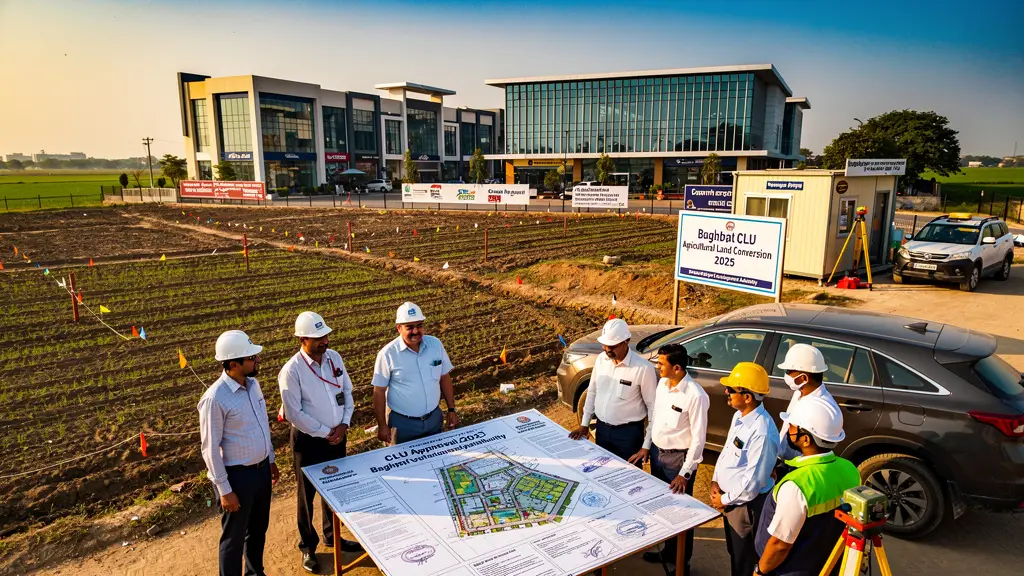
Understanding CLU Approval in Baghpat's Growth Corridor
Baghpat has emerged as one of the most strategically significant districts in the Delhi NCR landscape, largely due to its proximity to Delhi and its rapidly improving connectivity infrastructure. The Change of Land Use (CLU) approval process for agricultural land conversion has become a central topic for investors and landowners seeking to capitalize on this transformation. As Baghpat transitions from a predominantly agrarian economy to a hub for planned residential and commercial development, understanding the government approval mechanism is essential for anyone entering this market.
The Legal Framework Governing CLU in Baghpat
The CLU process in Baghpat falls under the jurisdiction of the Uttar Pradesh government, specifically administered through the Meerut Development Authority and local revenue departments. Agricultural land conversion requires landowners to submit applications demonstrating that the proposed use aligns with the district's master plan. Baghpat's inclusion in the extended NCR planning framework means that conversion approvals are increasingly streamlined for projects that support residential, industrial, or institutional development.
- Verification of land title and revenue records
- Master plan compliance certification
- Environmental clearance where applicable
- Payment of conversion charges based on circle rates
- Final approval from the competent authority
Why Baghpat Mirrors Noida and Greater Noida's Early Growth Pattern
Investors frequently draw parallels between Baghpat's current trajectory and the early development phases of Noida and Greater Noida. Both regions began as agricultural belts before systematic CLU approvals unlocked massive commercial and residential potential. Baghpat's connectivity to Delhi via improved highways and its proximity to the Western Peripheral Expressway have accelerated similar interest from developers and end-users alike.
Comparative Market Dynamics Across NCR and Beyond
The land conversion approval process is not unique to Baghpat. Across NCR, districts pursuing systematic urbanization, including areas near Shukrtaal, have adopted comparable frameworks to convert agricultural holdings into development-ready parcels. This regional consistency provides confidence to investors evaluating multiple locations simultaneously.
Interestingly, this pattern extends beyond NCR as well. Gujarat's Dholera Special Investment Region offers a compelling case study where government-backed land pooling and conversion mechanisms transformed vast agricultural tracts into India's first greenfield smart city zone. The Dholera model demonstrates how transparent, government-approved conversion processes can dramatically accelerate land value appreciation, a lesson increasingly relevant to Baghpat's evolving policy environment.
Key Factors Driving Baghpat's CLU Demand
- Direct connectivity to Delhi and western NCR
- Proximity to upcoming expressway networks
- Rising institutional and industrial interest
- Government push for planned urban expansion
- Relatively affordable land rates compared to Noida and Greater Noida
According to data referenced by the Delhi Development Authority, NCR's peripheral districts continue to absorb overflow demand from saturated urban cores, reinforcing Baghpat's long-term relevance in regional planning.
Navigating the Approval Timeline
The CLU approval timeline in Baghpat typically depends on documentation completeness, land classification, and the nature of proposed development. Applicants pursuing residential township approvals often experience different processing timelines compared to those seeking industrial or commercial conversions. Engaging experienced land consultants familiar with Meerut Development Authority procedures significantly reduces delays and compliance risks.
Strategic Outlook for Investors and Landowners
Baghpat's agricultural land conversion landscape represents a rare window of opportunity within the broader Delhi NCR ecosystem. As government approval processes mature and infrastructure projects materialize, early movers stand to benefit from both capital appreciation and development flexibility. Whether comparing Baghpat to established markets like Noida or emerging models like Dholera, the underlying principle remains consistent: transparent CLU processes unlock genuine long-term value.
For investors, developers, and landowners seeking clarity on Baghpat's conversion opportunities or exploring similar prospects across NCR, Post Your Requirement to connect with specialists who understand the nuances of this evolving market.
- Research Team
Market Intelligence Desk, Bhavya Ventures™
VERIFIED INSIGHTSGhaziabad, Noida aur Dholera ke real-time data aur market trends ko track karke yeh report humari Market Intelligence Desk dwara taiyar ki gayi hai, taaki aapko 100% factual aur verified insights mil sakein.
Expert AI Insights (FAQs)
Q: What is CLU approval and why is it needed in Baghpat?
CLU, or Change of Land Use, is a mandatory government approval required to convert agricultural land into residential, commercial, or industrial use. In Baghpat, this approval ensures development aligns with the district's master plan and NCR regional guidelines.
Q: How long does the Baghpat CLU approval process take?
The timeline varies based on documentation, land classification, and development type, but complete applications with proper title verification typically move through the process more efficiently under current administrative procedures.
Q: Is Baghpat land conversion similar to Dholera's model?
Both regions follow structured government-backed conversion frameworks, though Dholera's SIR model involves large-scale land pooling while Baghpat follows conventional CLU procedures under UP state authorities.
Q: Which authority handles CLU applications in Baghpat?
The Meerut Development Authority, alongside local revenue departments, oversees CLU applications and agricultural land conversion approvals for the Baghpat district.
Related Real Estate Concepts & Guides
Interested in this Concept?
Discover available properties in this category across India.
VIEW FULL COMMERCIAL INVENTORYEXPLORE OTHER CATEGORIES
MARKET INTELLIGENCE
Bhavya Ventures is an ISO 9001:2015 Certified brand. Our experts analyze NCR trends daily.
READ NEWS →VERIFIED STATUS
- ✅ 100% Verified Documents*
- ✅ Direct-to-Owner Inventory