LANGUAGE
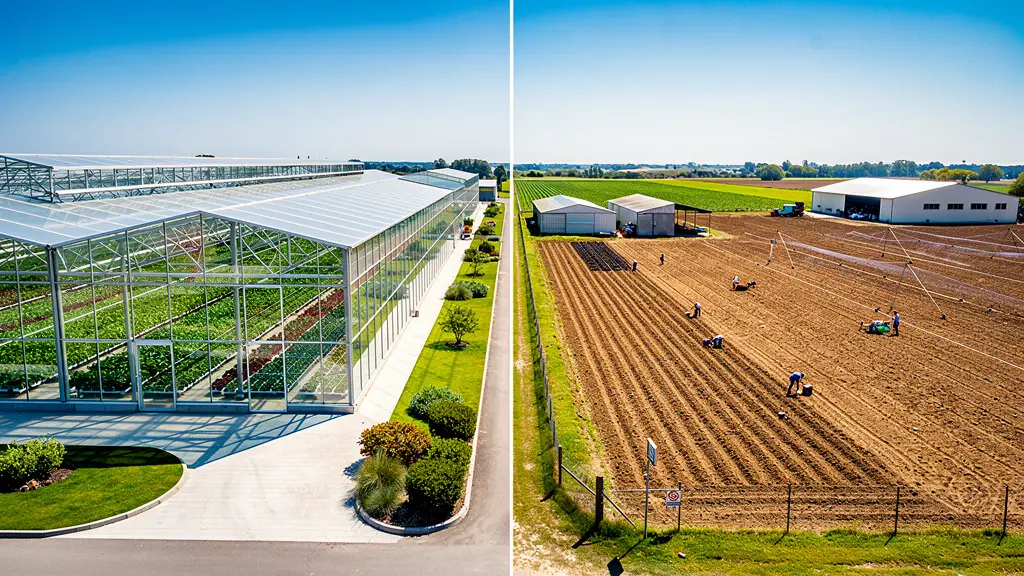
Polyhouse Farming vs Traditional Agriculture: The Real Market Comparison
Agricultural land investment is undergoing a structural shift across India, and nowhere is this more visible than in the Delhi NCR belt. Investors and farmers are increasingly comparing Polyhouse farming against Traditional Agriculture to determine which model delivers superior long-term value, yield stability, and land appreciation.
Traditional Agriculture: Strengths and Limitations
Traditional open-field farming remains the backbone of rural economies in regions like Baghpat and Shukrtaal, where fertile Yamuna basin soil supports crops like wheat, sugarcane, and vegetables. However, this model is entirely dependent on weather patterns, seasonal cycles, and unpredictable input costs, making yield and income inconsistent year after year.
The Polyhouse Advantage
Polyhouse farming eliminates weather dependency by creating a controlled microclimate for crops. This translates into three to five times higher yield per acre compared to open farming, along with the ability to grow high-value crops like capsicum, exotic vegetables, and flowers throughout the year. For landowners near Noida and Greater Noida, where land value is climbing due to urban expansion, Polyhouse structures allow farmland to generate commercial-grade returns without losing agricultural classification.
Market Facts: Yield, Investment and ROI Comparison
- Polyhouse farming delivers 60 to 80 percent higher crop yield per acre compared to traditional open farming.
- Water consumption in Polyhouse units is nearly 30 percent lower due to drip irrigation integration.
- Traditional agriculture near Baghpat and Shukrtaal yields one or two harvest cycles annually, while Polyhouse units support continuous multi-cycle production.
- Land parcels near Noida and Greater Noida with Polyhouse infrastructure command a premium valuation compared to plain agricultural plots.
- Initial investment for Polyhouse setup is higher, but breakeven is typically achieved faster due to premium crop pricing.
Why Delhi NCR is the Epicenter of Polyhouse Growth
Delhi NCR's proximity to massive consumer markets makes it the natural hub for Polyhouse expansion. Farmland around Noida and Greater Noida is being restructured into hybrid agricultural investment zones, where Polyhouse units supply fresh produce directly to metro markets. Meanwhile, Baghpat and Shukrtaal are emerging as strategic satellite belts, offering larger land parcels at lower entry costs while still benefiting from NCR's logistics and demand network.
Dholera: The Next Frontier for Agricultural Innovation
Beyond NCR, Dholera in Gujarat is setting a new benchmark for planned agricultural and industrial integration. As a greenfield smart city project, Dholera offers investors the rare advantage of acquiring land early, before infrastructure maturity drives valuations upward. Polyhouse farming models are increasingly being evaluated here as a bridge investment, generating agricultural income while the region's industrial and residential value appreciates over time.
Which Model Should Investors Choose
Traditional agriculture remains suitable for large landholders in stable rural belts like Shukrtaal who prioritize low input costs. However, for investors targeting appreciating corridors such as Noida, Greater Noida, and Dholera, Polyhouse farming offers a dual benefit: consistent agricultural income today and stronger land value tomorrow. Baghpat, positioned strategically between rural fertility and NCR proximity, represents an ideal middle ground for investors seeking both yield security and future capital growth.
The verdict is clear. Polyhouse farming is not merely a technological upgrade, it is a market-driven evolution that aligns agricultural productivity with real estate appreciation, making it the preferred choice for forward-looking investors across Delhi NCR and emerging corridors like Dholera.
- Research Team

Mr Vinay Mehrotra
MD & REALTY EXPERTMr. Vinay Mehrotra is the Managing Director and Lead Real Estate Expert at Bhavya Ventures, an ISO 9001:2015 certified property portal. With over two decades of extensive experience in the Indian real estate market, he specializes in strategic property transactions across commercial, industrial, residential, and agricultural sectors. A trusted industry advisor, Mr. Mehrotra is highly regarded for his meticulous approach to property verification, risk assessment, and navigating the complex landscape of real estate compliance and regulatory frameworks in India.
Expert AI Insights (FAQs)
Q: Is Polyhouse farming more profitable than traditional agriculture?
Yes, Polyhouse farming typically delivers 60 to 80 percent higher yield per acre and allows multiple crop cycles annually, resulting in significantly higher profitability compared to traditional open-field farming.
Q: Why is Delhi NCR considered ideal for Polyhouse investment?
Delhi NCR offers proximity to large consumer markets, strong logistics infrastructure, and rising land values in areas like Noida and Greater Noida, making Polyhouse farming both agriculturally and commercially rewarding.
Q: Are Baghpat and Shukrtaal suitable for traditional farming or Polyhouse setups?
Both regions have fertile Yamuna basin soil ideal for traditional crops, but their proximity to NCR also makes them attractive for Polyhouse investment aimed at future land appreciation.
Q: How does Dholera fit into the agricultural investment landscape?
Dholera offers early-stage land acquisition advantages, allowing investors to use Polyhouse farming for income generation while benefiting from long-term appreciation as the smart city infrastructure matures.
Related Real Estate Concepts & Guides
Interested in this Concept?
Discover available properties in this category across India.
VIEW FULL COMMERCIAL INVENTORYEXPLORE OTHER CATEGORIES
MARKET INTELLIGENCE
Bhavya Ventures is an ISO 9001:2015 Certified brand. Our experts analyze NCR trends daily.
READ NEWS →VERIFIED STATUS
- ✅ 100% Verified Documents*
- ✅ Direct-to-Owner Inventory